How People Make Decisions
ECO111: Principles Of Economics Chap 1: Ten Principles Of Economics
Scarcity and Economics
The management of society’s resources is important because resources are scarce. Scarcity means that society has limited resources and therefore cannot produce all the goods and services people wish to have. Just as each member of a household cannot get everything she wants, each individual in a society cannot attain the highest standard of living to which she might aspire.
Economics is the study of how society manages its scarce resourcess. In most societies, resources are allocated not by an all-powerful dictator but through the combined choices of millions of households and firms.
1. How People Make Decisions:
Principle 1: People Face With Trade-offs
You may have heard the old saying, “There ain’t no such thing as a free lunch.” Grammar aside, there is much truth to this adage. To get something that we like, we usually have to give up something else that we also like. Making decisions requires trading off one goal against another.

To conclude, principle 1 is about getting something that we like, we have to give up something else that we also like. Consider a student who must decide how to allocate her most valuable resource—her time. She can spend all of her time studying economics, spend all of it studying psychology, or divide it between the two fields. For every hour she studies one subject, she gives up an hour she could have used studying the other. And for every hour she spends studying, she gives up an hour she could have spent napping, bike riding, watching TV, or working at her part-time job for some extra spending money.
Principle 2: The Cost of Something Is What You Give Up to Get It
Because people face trade-offs, making decisions requires comparing the costs and benefits of alternative courses of action. In many cases, however, the cost of an action is not as obvious as it might first appear.
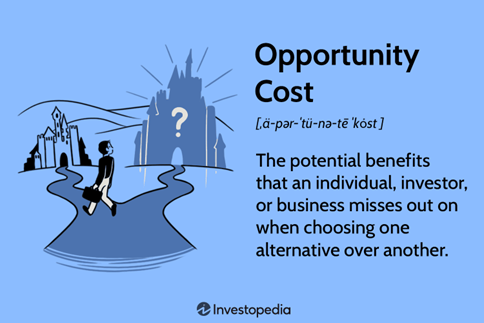
The opportunity cost of an item is what you give up to get that item. When making any decision, decision makers should be aware of the opportunity costs that accompany each possible action.
The opportunity cost of an item is what you give up to get that item.
Principle 3: Rational People Think at the Margin:
Economists normally assume that people are rational. Rational people systematically and purposefully do the best they can to achieve their objectives, given the available opportunities

Economists use the term marginal change to describe a small incremental adjustment to an existing plan of action. Keep in mind that margin means “edge,” so marginal changes are adjustments around the edges of what you are doing. Rational people often make decisions by comparing marginal benefits and marginal costs.
marginal changes are adjustments around the edges of what you are doing.
Principle 4: People Respond to Incentives
An incentive is something (such as the prospect of a punishment or reward) that induces a person to act. Because rational people make decisions by comparing costs and benefits, they respond to incentives. You will see that incentives play a central role in the study of economics. Incentives are key to analyzing how markets work. For example, when the price of an apple rises, people decide to eat fewer apples. At the same time, apple orchards

decide to hire more workers and harvest more apples. In other words, a higher price in a market provides an incentive for buyers to consume less and an incentive for sellers to produce more.